July 14th, 2009
Hamida, a 30 year old businesswoman from Kabul, Afghanistan, is putting her unique sense of style to good use. Hamida is in the midst of launching her new business that specializes in distributing handmade goods and accessories.
While growing up, Hamida let her imagination and creativity run wild and would often be the one who was called on to pick her sisters’ and mothers’ outfits and even decorate their homes.
Using this ability, Hamida founded a business in which she buys handmade crafts from people in Kabul and surrounding villages and sells them in Pakistan. She has seen a wide range of success so far and with formal business training, she is sure to build on that.
On top of running her newly formed business, Hamida also serves as an Administrative Officer for the Ministry of Rural Rehabilitation and Development.
Despite being busy beyond belief, Hamida has still found time to look to the future and knows that her upcoming trip to America will continue to aid her development.
“I believe that this training will bring new enhancements, new ways of expressing my business, and help my business become distinguished from the [competition] in Afghanistan.”
Posted in 2009 PTB Students | No Comments »
July 14th, 2009
Farghana, a 20 year old businesswoman from Kabul, Afghanistan, has proven herself to be one of Afghanistan’s most up and coming businesswomen. What started as a dream to own her own retail store while living in her temporary refuge of Peshawar, Pakistan during the Taliban’s insurrection has become a reality. After being involved in the operation of her uncle’s cosmetic’s shop, Farghana looked to the future to start her own store.
Upon returning to Afghanistan, Farghana and her mother opened up their own retail clothing store in Kabul. But that was just the beginning.
She now owns and operates her own retail clothing store in one of the city’s biggest markets. What makes her position even more unique is the fact that she is the only female shop owner in the market. On top of running her store, Farghana also serves as the manager of the Trader Woman’s Association in Kabul.
Although Farghana treads uncharted waters being a female business owner in an all male market, she doesn’t let that bother her. She chooses to look at the business end of things.
“The most important thing at this market is the quality of our products. We are trying to have the best quality,”
Posted in 2009 PTB Students | No Comments »
July 14th, 2009
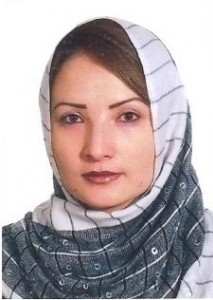
Razia, a 30 year old businesswoman from Kabul, Afghanistan, has proven to shown tact and altruism in the business world from day 1. After marrying her husband and immigrating to Iran during the Taliban’s oppressive reign in the earlier part of the decade, Razia first became involved in politics.
Her husband, who served as the First Secretary at Afghan Embassy in Tehran, Iran, opened the door for her to become assertive in a work environment. Here, Razia became a member of the Executive of Diplomatic Ladies Group. This group was charged with a host of responsibilities including sponsoring charity events and reaching out to other embassies.
Since moving back to Afghanistan, Razia has joined a group similar to the one she was a member in during her stay in Tehran. On top of that, she has become an affluent contributor in business.
After working with a pottery and sewing business for several years, Razia has decided to open her own shop specializing in the same field. She feels that in doing so, she can make a difference in not only her life but in the lives of women all over Afghanistan.
“Women in Afghanistan are confined for different reasons…the main reason is lack of ownership. Men have it and women don’t,” said Razia. “I want to open my own shop and achieve this goal of [ownership] and beat these difficulties.”
Posted in 2009 PTB Students | No Comments »
July 14th, 2009
Asma, a 23 year old businesswoman from Kabul, Afghanistan, has brought new ideological thought to the way business is done in her country. After the Taliban’s rule came to an end in Afghanistan, Asma began thinking of ways to empower women in her newly liberated home country.
She first reached out to several services providers and entrepreneurs, but quickly she realized that most of them had no idea what systematic business training was. Seeing this, Asma started a small business development firm, which provides BDS (Business Development Services) to growing and budding businesses.
Asma feels that this is the best way she can help her country and her fellow countrywomen.
“I started BDS training [in hopes] of establishing many business associations for women. I want to help them generate income and help men and women [alike].”
Posted in 2009 PTB Students | No Comments »
July 14th, 2009
Khalida, a 34 year old businesswoman from Kabul, Afghanistan, is taking one of the country’s downsides and is implementing it into a progressive new business.
Afghanistan is home to thousands of refugees and IDPs (Internally Displaced People). Khalida has spent the majority of her business career helping these people get back on their feet. But after talking to her good friend and former Peace through Business graduate, Amir Taj Sirat, Khalida has decided that she can put her efforts to better work.
Under the encouragement of Sirat, Khalida has decided to start a ball making business, in which she can employ IDP’s and other women in the hopes that this could provide a long term solution to their economic displacement.
After completing her second year of operation, Khalida has decided she needs a little bit more business training in order to fully maximize her business’s potential. In conjunction with this, Khalida has been accepted into the 2009 Peace through Business program.
She feels that this will really help her progress, which will help other women’s progress in Afghanistan.
“It is [my] wish to provide job opportunities for women via my company and hope that this company can solve some of their (women’s) problems,” said Khalida. “In the future, I want my company to be famous for what it does.”
Posted in 2009 PTB Students | No Comments »
July 14th, 2009
Farzana, a 30 year old businesswoman from Kandahar, Afghanistan, is fighting the country’s cultural norm and blazing her own path to economic prosperity.
Farzana spent the majority of her adolescence in neighboring countries in an endeavor to avoid the Taliban’s reign. It was during this time that she began to develop a self empowered attitude towards life and began to think for herself.
Upon returning to Afghanistan, Farzana looked for different ways to help out her war torn country. Eventually, she founded the Kandahar Health and Development Organization (KHDO) in Kandahar, Afghanistan.
KDHO specializes in training women in the fields of sewing, embroidering, and knitting in hopes that it will help propel them into a successful career down the road.
Despite facing harsh criticism from men in Kandahar and the surrounding areas, Farzana’s business continues to flourish. She contributes this mostly to her and her team’s bravery and willingness to be strong.
“[Men] are trying to ruin our organization in the public’s mind, but my small team and I…aren’t disappointed with the reactions we are getting,” said Farzana about the public’s reaction their new business.
Even though there is public rejection of what Farzana is trying to do, that doesn’t lead her to take her eyes off the prize.
“My team and I have a dream and we [will] achieve it.”
Posted in 2009 PTB Students | No Comments »
July 14th, 2009
Jamila, a 39 year old businesswoman from Kabul, Afghanistan, is living life in the fast lane, literally. She currently owns and operates a car dealership. Jamila got the idea of starting a career in car sales after dealing with a troublesome van during her stint as a program manager at Women for Afghan Women.
After quickly learning the in and outs of the business, Jamila found partners in Herat, a neighboring province in Afghanistan, and in Canada that help her fund and run her company. Jamila now specializes in selling used Japanese cars throughout the many provinces of Afghanistan.
Despite being one of the very few women who work in car retail, Jamila remains confident that she will be able to succeed in running her new business. Upon her arrival to the United States, Jamila hopes she will become better prepared in her product marketing skills, her negotiation skills, and her overall business presentation skills.
Jamila feels that after coming to the United States, the combination of her sales career and her formal training will give hope to her and her country.
“I feel that my confidence will build and my micro enterprise skills will also build and eventually, I will be able to represent a strong woman who can run her own business. And [ultimately] this will lead to the eradication of poverty and the spreading of peace.”
Posted in 2009 PTB Students | No Comments »
July 14th, 2009
Andeisha, a 26 year old businesswoman from Kabul, Afghanistan, is using her variety of business and managerial skills to help influence Afghan children at a young age.
Andeisha spent almost her whole childhood and adolescence living in refugee camps in countries neighboring Afghanistan. It was living through this experience that inspired her to get involved with helping children.
While living in Pakistan, Andeisha got involved with a non-profit that started the Child Sponsorship Program in conjunction with the U.S. based charity, Charity Help International. Upon the program’s inception, Andeisha was named Program Coordinator.
After a successful run with the Child Sponsorship Program, Andeisha moved backed to Kabul in 2007 and started a new non profit, the Afghan Child Education and Care Organization (AFCECO). Furthermore, Andeisha was named Executive Director of the program.
Since starting the program, AFCECO runs 7 orphanages in Afghanistan, 2 orphanages in Pakistan, a girl’s school, and several vocational training centers around the country.
Andeisha believes that AFCECO’s principles and policy’s set the kids up for future success and sets the country up for more tolerance and prosperity in the future.
“We teach our kids to live in peace, love, tolerance, and harmony. The children are taught and encouraged to live within these boundaries and promote them in their life choices.”
Posted in 2009 PTB Students | No Comments »
July 14th, 2009
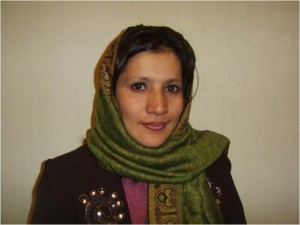
Frozan, a 30 year old businesswoman from Kabul, Afghanistan, is using her medical background to bring a chance of hope to her fellow countrymen and women.
Frozan spent the majority of her educational experience training to practice medicine. But when she married, she had to temporarily forfeit the idea. But under the encouragement and guidance of her husband, Dr. Obaidullah Raufi, Frozan has reopened her dream.
In 2007, Frozan and her husband opened their clinic, the Family Medical Clinic.
Despite their skeptics, their business is booming. They have already exceeded their initial business expectations and they have even started to expand. They now are responsible for their main clinic and several other health missions in neighboring villages and provinces.
The joy of success, however, has come second to the sense of satisfaction Frozan feels from helping those who haven’t always been helped.
“I have [so] many patients and people coming to my clinic…and as you know we are [working] in a field that starts off with very little income and that is in a very poor country. I am so happy with my business and wish that one day we can help not only people in my country, but all over the world.”
Posted in 2009 PTB Students | No Comments »
July 14th, 2009
Shakila, a 37 year old businesswoman from Kabul, Afghanistan, is using her village of skilled women to launch a successful hand crafts business.
Shakila, who is a member and leader of the Association Coordination of Afghan Women, has used her well rounded business savvy to strike up a deal with a raw materials distributor in order to get her business off the ground.
Taking the raw materials from her distributor, Shakila then distributes the materials amongst the women in her village and they make handcrafts for men and women accordingly.
Shakila feels that the Peace through Business program will only sharpen her skill sets and make her a better business woman.
“This [program] will help me exchange ideas and [help me] learn how to expand our project to the provincial level. It will also help us gain support from the international community and encourage women to be a part of business.”
Posted in 2009 PTB Students | No Comments »